STAR: Super Tricky Amazing Run
CASUAL AZUR GAMESArcade
4.25.09K Reviews
- Version
- 2.30.04
- Installs
- 100.00M
- Age Rating
- Everyone
Screenshots
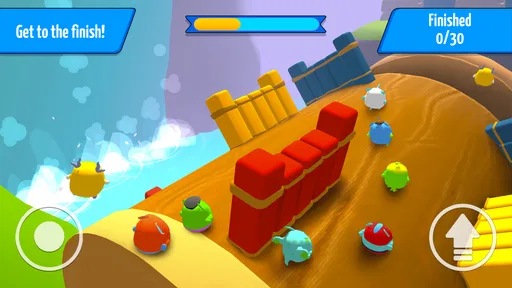
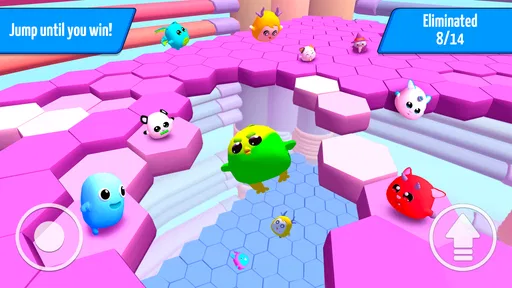
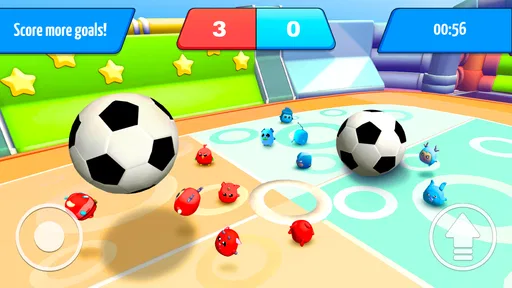
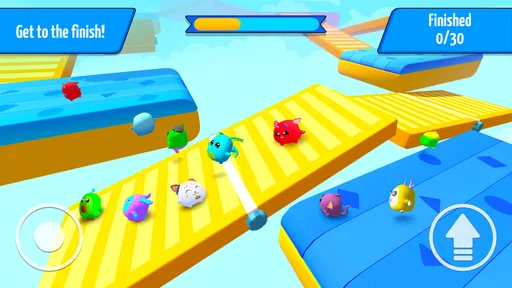
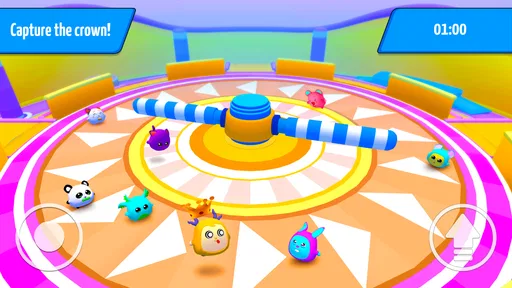
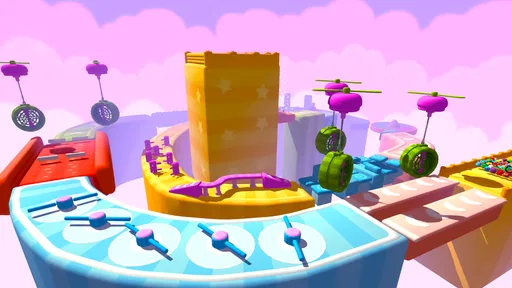
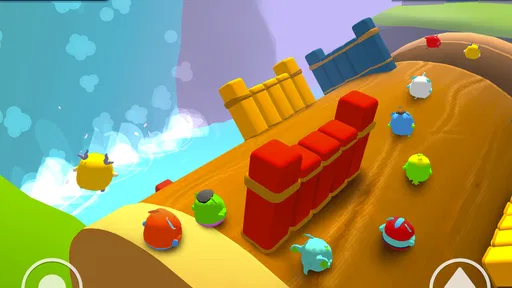
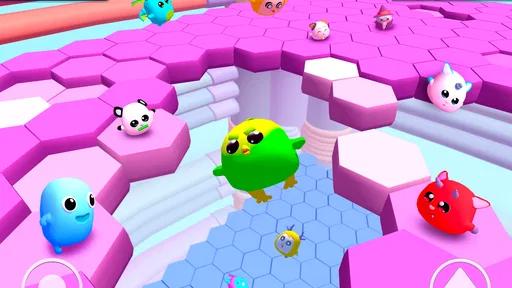
Our Review of STAR: Super Tricky Amazing Run
 Analysis by Appyee
My first reaction to STAR: Super Tricky Amazing Run was that it understands the appeal of a quick arcade game immediately. You enter a race, try to keep moving through a messy obstacle course, and accept that stumbling is part of the entertainment. It is easy to start without a long explanation, but the simple controls still leave room for mistakes, lucky recoveries, and the satisfying feeling of finishing a round after nearly falling behind.
That combination explains why the game works so well during a short break. I can play it when I have only a few minutes, yet it does not feel like a completely empty time-killer. The races create small moments of tension, especially when several runners are competing for space and an obstacle interrupts a route that looked safe a second earlier. The experience is light, colorful, and deliberately accessible rather than demanding in the way a serious competitive game can be.
What the first week feels like
The opening appeal comes from the immediate rhythm. I do not need to study a complicated interface before attempting a race. I simply learn by moving, reacting, and noticing which parts of a course punish rushing. That makes the first sessions welcoming for casual players, younger users, and anyone who prefers arcade games that get to the action quickly.
Its Everyone content rating also matches that approachable presentation. I would feel comfortable suggesting it to someone looking for playful, non-serious entertainment, although the rating should not be confused with a promise that every moment is calm. Losing near the end of a run can still be surprisingly irritating when I know one small mistake caused it.
The most enjoyable early discovery is that failure is not always discouraging. A stumble can become part of the joke, and a recovery can feel more memorable than a clean section. This gives the game a friendly personality that many traditional obstacle or racing games lack. Instead of treating every error as a harsh penalty, it makes clumsy movement part of the central spectacle.
That design is especially useful in an everyday situation. If I am waiting for a bus or taking a short break between tasks, I can play a round without committing to a long campaign. The game suits fragmented time better than a story-driven adventure, where stopping halfway through a mission can make the next session feel disconnected. Here, each attempt is naturally self-contained.
During the first week, I would recommend experimenting rather than trying to win every race immediately. A common mistake is to hold a direction too long because the next obstacle looks farther away than it really is. Shorter corrections are usually easier to recover from. I also found that watching the movement of the crowd can be useful: other runners reveal where a hazard is likely to disrupt the route, even if following them blindly is not always the best decision.
That is one of the game’s first non-obvious strengths. The crowd is not just decoration; it changes how I read a course. A cluster of runners can make a safe path look blocked, while an empty lane may be dangerous rather than convenient. Learning to separate visual chaos from useful information gives the simple controls more depth than the store summary suggests.
CASUAL AZUR GAMES keeps the presentation focused on quick amusement, and that focus helps the game avoid a slow introduction. I do not have to invest in a large fictional world before understanding what makes the experience fun. The trade-off is that players who need a strong narrative, detailed character development, or a carefully structured campaign may find the first-week novelty thinner than expected.
The game is free to download, which makes trying it easy. There are in-app purchases ranging from $0.99 to $99.99 per item, so I would approach the purchase options deliberately rather than tapping through them automatically. For me, the free entry is enough to judge whether the core races fit my habits. I would not spend money simply because the first few sessions are entertaining; the more important question is whether I still want another run after the initial surprise has faded.
Learning the difference between luck and control
Early races can make the outcome seem random, especially when several runners collide or a mistake happens in a crowded section. With more practice, I noticed that not every setback is equally unavoidable. Some failures come from entering an obstacle at the wrong angle, while others come from reacting too late because I was watching the finish instead of the next piece of the course.
I found it helpful to focus on the next safe landing rather than the whole route. This sounds obvious, but it changes the way I play. Looking too far ahead encourages overcorrection, while concentrating only on the immediate movement keeps the run manageable. That approach also makes the game less frustrating for new players because improvement becomes visible in small decisions rather than only in final placement.
Another useful habit is to treat the first attempt at a difficult section as reconnaissance. Instead of becoming annoyed by a fall, I try to remember the timing and the direction that caused it. On the next run, I make one adjustment rather than changing everything. That keeps the game from turning into random button pressing and gives repeated attempts a clear purpose.
What remains after the novelty
The bigger question is whether STAR can stay installed beyond the first week. My answer is qualified: it has recurring value for players who enjoy short, repeatable arcade challenges, but it is not designed to satisfy every kind of long-term player. Its strength is the low commitment of each session. I can return after a day away and understand the appeal immediately, without remembering a complicated plot or rebuilding a large strategy.
That makes it a good companion game rather than necessarily a main game. I would keep it available for quick breaks, casual competition, or moments when I want something active but not emotionally heavy. I would be less likely to make it my only mobile game because the basic race loop can begin to feel familiar once the initial discovery period is over.
The game’s average rating is 4.2 from around 259 thousand ratings, and it has received roughly 5.1 thousand written reviews. More than 100 million installs also show that its accessible format has reached a very broad audience. Those figures do not decide my opinion, but they fit my experience: this is built to be understood quickly, shared easily, and revisited in short bursts rather than studied like a complex simulation.
Month-to-month value depends heavily on the kind of satisfaction I want. If I enjoy improving reactions, replaying a familiar style of challenge, and laughing at imperfect runs, the game can remain useful. If I need constant new mechanics, a deep progression system, or a strong sense of personal ownership over a character, the reasons to return may weaken faster.
This is where it differs from usual alternatives in the arcade category. A traditional endless runner often asks me to survive as long as possible and beat my previous distance. STAR is more socially chaotic in its presentation: the pressure comes from navigating a race environment where other runners make the course feel crowded and unpredictable. On the other hand, a focused score-chasing arcade game may offer cleaner feedback and a more precise sense of mastery. I would choose this game for messy, humorous competition, not for perfectly measured leaderboard practice.
It also occupies a different space from a full racing game. I am not choosing vehicles, tuning performance, or planning a long championship. That simplicity is a benefit when I want instant play, but it becomes a limitation when I want strategic customization. The right alternative depends on whether I value accessibility or depth at that moment.
Small routines that make repeated play better
For lasting use, I would create a simple routine instead of opening the game without a reason. One option is to play a fixed number of races and stop, whether the session went well or badly. That prevents a frustrating loss from turning into an unnecessarily long attempt to recover pride. Another is to use each session to practice one skill, such as earlier turns or calmer movement near obstacles.
A second practical tip is to change the context in which I play. The game works well as a short reset between demanding tasks because it requires attention without asking me to remember a large amount of information. I would avoid using it when I need completely passive relaxation, though. Even a brief race can keep my mind active, and repeated failures may leave me more wound up rather than refreshed.
I also think it is worth deciding in advance how to handle purchases. Because the game is free but includes individual items from less than a dollar to nearly a hundred dollars, I would review each option for its actual value to my play style. If I am only using the game occasionally, spending may not improve the experience enough to justify it. The free version is the sensible starting point for nearly everyone.
For parents or anyone sharing a device, the Everyone rating makes the game easier to consider from a content perspective, but purchase awareness still matters. The age rating describes suitability of content; it does not remove the need to pay attention to optional spending. I would make sure the device’s purchase controls match the person using the game, especially when the game is treated as a casual family download.
Where repetition starts to wear thin
The main source of fatigue is the same quality that makes the game approachable: the core idea is immediately clear. There is little friction between opening the app and playing, but that also means I can understand the basic loop quickly. Players who need a steady stream of new goals may feel that the experience loses momentum once the novelty of stumbling through races has passed.
Another possible irritation is visual and competitive congestion. Crowded action is funny when I am in the mood for unpredictability, but it can feel unfair when I am trying to make a careful move and another runner disrupts the moment. I have to accept that not every defeat will feel like a pure test of skill. If I want complete control over every outcome, a more precise arcade game would probably suit me better.
The game can also be a poor fit for people who dislike repetition. Its short-session format encourages returning to the same general style of challenge, and not everyone finds that loop relaxing. I would skip it if my priority were a long narrative, a quiet puzzle experience, or a detailed competitive system where every result can be explained through planning.
Maintenance is relatively simple from a player’s point of view because the game does not demand a daily routine to remain understandable. I can leave it for a while and return without feeling lost. That is valuable for a secondary game, but it also means the habit must come from my own enjoyment rather than from a large ongoing commitment. It does not automatically create a reason to check in every day.
The current version is 2.30.04, and the game runs on Android 8.0 or later. That makes the compatibility requirement important before installing it on an older device. I would also leave room for the practical realities of mobile play: arcade action is more enjoyable when the screen responds reliably and the device is not struggling with other tasks. Those are not reasons to reject the game, but they can affect whether its quick races feel smooth in everyday use.
Who should keep it installed?
I would recommend STAR to someone who wants a free arcade game that can be understood in minutes and played in short sessions. It is particularly suitable for players who enjoy obstacle-course chaos, humorous failures, and the small satisfaction of gradually making fewer mistakes. It is also a reasonable choice for a shared family device because of its Everyone content rating, provided optional purchases are handled responsibly.
I would be more cautious recommending it to someone who quickly tires of repeated races. The game’s lasting appeal comes from the feel of the attempts, not from an elaborate long-term structure. If you need a deep progression path or a substantial story to keep you engaged, another category of game will probably serve you better.
My strongest recommendation is to treat it as a flexible side game. Keep it for commutes, waiting rooms, short breaks, or a few light rounds with friends nearby. Do not expect it to replace every other type of mobile entertainment. Its value is greatest when I want immediate interaction and can accept that some of the fun comes from losing in an entertaining way.
After the first month, I would judge it by one honest test: do I open it because I genuinely want another race, or only because it happens to be installed? For me, it earns continued space when I use it as a controlled, short arcade break. It does not earn that space through depth alone, and players looking for a constantly expanding experience may eventually move on.
Overall, STAR: Super Tricky Amazing Run succeeds as an approachable arcade game with a clear personality. CASUAL AZUR GAMES has made something that is easy to enter, amusing when things go wrong, and convenient for irregular play. The free price lowers the risk of trying it, while the optional purchase range means I would keep spending decisions separate from the excitement of a good run.
My final verdict is that it earns a place as a casual repeat-play game, not as a universal long-term replacement for deeper alternatives. If you enjoy quick obstacle races and can appreciate controlled chaos, I think you will get real mileage from it. If your interest depends on constant novelty, precise competitive mastery, or a substantial story, the first-week charm may be the strongest part of the experience.
Verdict
Strengths of STAR: Super Tricky Amazing Run
- Fast-paced levels make each run feel exciting and unpredictable.
- Simple controls are easy to learn, even for casual players.
- Tricky obstacles reward careful timing and quick reactions.
- Short stages are convenient for playing during brief breaks.
- Bright visuals and playful design give the game a cheerful style.
Limitations of STAR: Super Tricky Amazing Run
- Some traps can feel trial-and-error rather than skill-based.
- Repeated failures may become frustrating without enough variety.
- Progress can slow down if later levels require many retries.
- The game may feel too simple for players seeking deep mechanics.
- Ads or in-app purchases may interrupt the experience, depending on the version.
Other Releases by CASUAL AZUR GAMES
View All
Worms Zone .io - Hungry Snake
Action4.3

Stack Ball - Crash Platforms
Arcade4.5

State.io — Conquer the World
Strategy4.1

Color Fill 3D
Puzzle4.6
Similar Picks in This Category
View All
Subway Surfers
SYBO Games4.6

Stickman Party 234 MiniGames
PlayMax Game Studio4.6

Subway Princess Runner
Ivy4.4

Temple Run
Imangi Studios4.2

Zombie Tsunami
Mobigame SAS4.6
Stack Ball - Crash Platforms
CASUAL AZUR GAMES4.5
Frequently Asked Questions
What is STAR: Super Tricky Amazing Run?
STAR: Super Tricky Amazing Run is a fast-paced obstacle-course game focused on timing, movement, and quick reactions. Players guide a character through challenging levels filled with traps, platforms, moving hazards, and unexpected surprises. The main appeal comes from learning each course, avoiding mistakes, and improving your performance through repeated attempts rather than relying only on luck.
How do you play STAR: Super Tricky Amazing Run?
The gameplay is built around simple controls, but the obstacle courses can be surprisingly difficult. You generally need to move, jump, and react at the right moment while watching for rotating platforms, gaps, traps, and changing paths. The controls are easy to understand for new players, although completing later stages requires patience, careful observation, and good timing.
Is STAR: Super Tricky Amazing Run suitable for children?
The game is generally approachable for children and casual players because its presentation is colorful, its objective is easy to understand, and the controls are not complicated. However, some levels may become frustrating when repeated failures are required to learn the correct route. Parents should also review the app’s advertising, in-app purchase, and privacy details before allowing younger children to play.
Does STAR: Super Tricky Amazing Run require an internet connection?
Whether an internet connection is needed can depend on the version of the app, device settings, advertisements, and any online features included by the developer. Basic running challenges may be playable offline, but certain content, updates, rewards, or ad-supported features could require connectivity. It is best to check the current store listing before downloading if offline play is important to you.
Is STAR: Super Tricky Amazing Run free to download?
STAR: Super Tricky Amazing Run may be available as a free download, but free access does not always mean the entire experience is completely without additional costs. Games in this category can include advertising, optional purchases, cosmetic items, or other enhancements. Before installing, review the Google Play or App Store listing to confirm pricing, supported devices, permissions, and purchase information.
Play our best games!


